Solution Overview
Submitter: ICRISAT
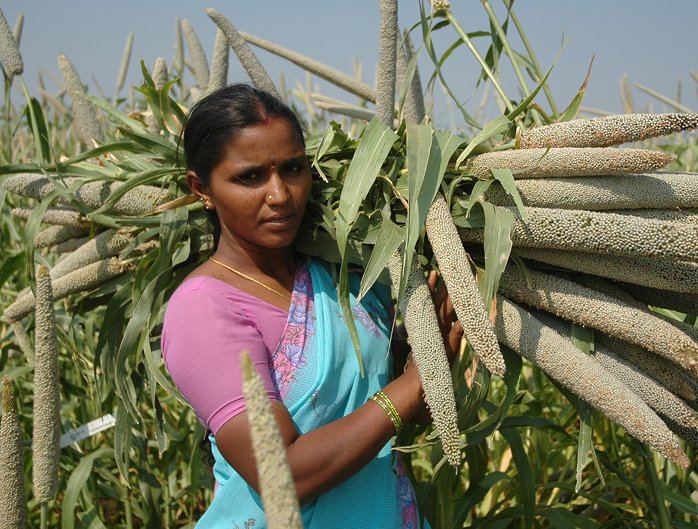
To tackle micronutrient malnutrition (hidden hunger), which affects approximately 2 billion people worldwide, has developed a biofortified open-pollinated pearl millet variety, Dhanashakti, and released it in India in 2013. ICRISAT has developed a series biofortified A and B lines for hybrid production. Using these biofortified inbred lines, Recently, ICRISAT's biofortified millet hybrids, LCICMH 2, LCICMH 3, LCICMH 4, and LCICMH 5, which contain high levels of grain iron (Fe) and zinc (Zn), were released in Nigeria in 2025. Over the last decade, the increased consumption of biofortified pearl millet has helped reduce micronutrient malnutrition in several Indian states like including Rajasthan and Maharashtra, where pearl millet is a staple food crop.
Key Features & Benefits
- The new series of biofortified pearl millet inbreds and hybrids contains more than 75 ppm Fe and 40 ppm Zn in grains.
- Dhanshakti also has 11% Higher grain yield than than the founder lines ICTP 8203
- Highly resistant to drought and downy mildew disease
- Dual purpose, and the stalk stover is used for livestock fodder
Where It Works and Where It Can Work
These are successfully grown in rainfed ecologies in the Indian states of Maharashtra, Rajasthan, Haryana, and Gujarat, with annual rainfall ranging from 300 to 700 mm, are the target regions for the release of biofortified pearl millet.
The biofortified pearl millet variety and its hybrids could be grown in similar agroecologies in West and Central African countries, as well as ESA countries, including Kenya, Zimbabwe, Uganda, and Namibia. Cultivation of the four hybrids could be scaled in Kenya and adjoining countries.
Evidence & Impact
The Dhanashakti seeds are available with Nirmal Seed Company and State Seed Corporations in Maharashtra, Telangana, Karnataka, Haryana, Uttar Pradesh, and Rajasthan. Shakti Vardhak Seed Company is marketing ICMH 1201, a high-iron pearl millet hybrid developed by ICRISAT, under the name Shakti 1201, which has 75 ppm Fe and 40 ppm Zn content in grains.
In ESA, several countries, including Kenya, Zimbabwe, Uganda, and Namibia, are prioritizing the release of biofortified pearl millet to address malnutrition in dry areas with limited nutritional opportunities.
According to estimates from feeding trials, these biofortified pearl millet cultivars would meet more than the daily iron requirement of 0.84 mg for men, as well as 70% of the daily requirement of 1.65 mg for non-pregnant, non-lactating women, and 42% of the daily requirement of 2.8 mg for pregnant women.
Scalability & Adoption Support
The biofortified pearl millet cultivars provide more than 60% higher iron (Fe) than non-biofortified cultivars, potentially benefiting millions of people. Consumers and farmers easily accept a biofortified cultivar with improved mineral content, as it does not require a change in cultivation practices or dietary habits.
However, adaptive trials are necessary to identify suitable, high-yielding varieties that farmers and consumers prefer, tailored to local conditions. Ready-to-cook or ready-to-eat products will also help scale production.
Contact Information & Partners
For key contacts and more information on scaling this solution,
please email: contact.issca@icrisat.org